How to Hike Bhutan's Most Iconic Monastery Safely
Tiger’s Nest Hike: Complete Guide to Paro Taktsang
Paro Taktsang, the Tiger's Nest Monastery perches 900 metres above the Paro Valley floor at 3,120 m elevation. This step-by-step guide covers trail options, difficulty, what to expect inside, and everything else you need for a successful hike.
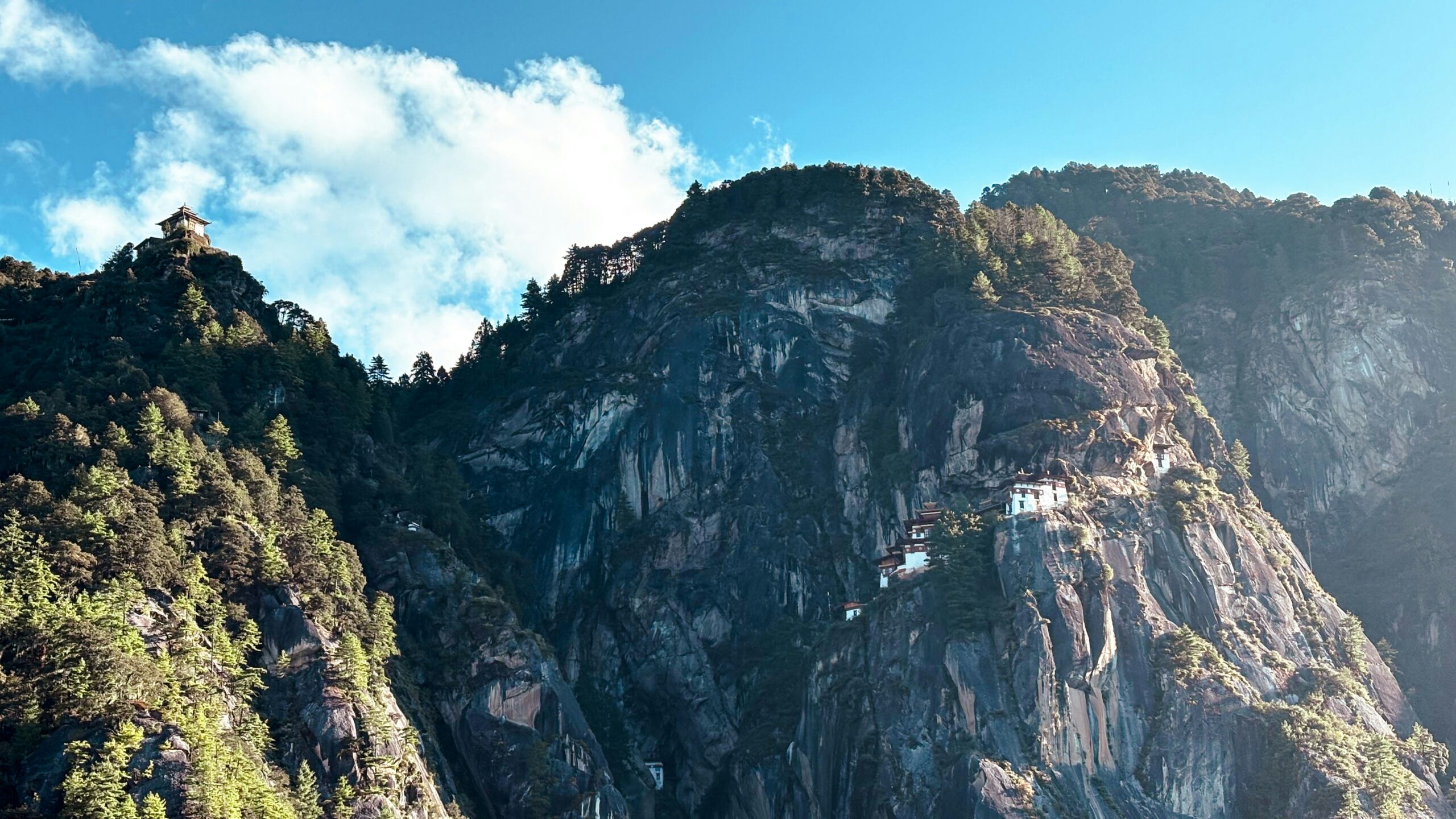
Paro Taktsang, the Tiger’s Nest Monastery, is the defining image of Bhutan. Perched on a sheer granite cliff 900 metres above the Paro Valley floor at an elevation of 3,120 metres, it is not merely a beautiful building. It is a sacred pilgrimage site that has drawn monks, pilgrims, and travellers for over three centuries. This guide covers everything you need to hike there confidently.
Tiger’s Nest at a Glance
Guru Rinpoche (Padmasambhava) is said to have flown to this cliff on the back of a tigress in the 8th century and meditated in a cave here for three months, subduing local demons and establishing Buddhism in Bhutan. The monastery complex, comprising four main temple buildings connected by steep staircases and rocky passageways, was built around that sacred cave in 1692. It was badly damaged by fire in 1998 and painstakingly restored by 2004.
The hike to Taktsang and back typically takes four to six hours at a relaxed pace, covering approximately 10 km round-trip with around 900 m of elevation gain. A full day is recommended. Rush it and you shortchange both the hike and the monastery itself.
The Two Trail Options
Option 1: Via the Cafeteria (Most Popular)
The main trail begins at the car park at Ramthangkha (2,200 m) and climbs steadily through blue pine and mixed rhododendron forest on a well-maintained dirt path. After roughly 90 minutes you reach the halfway cafeteria at approximately 2,700 m, a stone building with jaw-dropping direct views across to the monastery clinging to the cliff opposite. Almost every hiker stops here. Tea, coffee, and light snacks are available at a premium.
From the cafeteria the trail continues upward, then descends steeply into a ravine with a waterfall before the final zigzag climb to the monastery entrance gate. Total ascent from car park to monastery is about 2.5 hours at a moderate pace.
Option 2: Direct Trail (Shorter and Steeper)
A more direct path bypasses some of the switchbacks and shaves 20 to 30 minutes off the ascent. It is steeper and less scenic, without the cafeteria views. Some guides use this route on the descent to vary the experience. If you are short on time it is a valid option, but most visitors prefer the cafeteria route in both directions for the views.
Horses are available for hire at the trailhead to carry visitors to the cafeteria level. This is a genuine option for those with limited mobility or fitness, as the horse portion covers roughly half the total elevation gain.
What to Expect at the Monastery
Entering the monastery complex requires removing your shoes at the gate and passing through a security check. Your licensed guide will have arranged your monastery permit in advance. Photography is strictly prohibited inside all temple rooms and only permitted in the outer courtyards. This is firmly enforced. Dress modestly: no shorts, no sleeveless tops, and no hats inside the buildings.
The complex contains four main temple buildings dedicated to different manifestations of Guru Rinpoche. The innermost cave, where he is said to have meditated, is a small, dimly lit chamber thick with incense smoke and butter lamp offerings. It is one of the most atmospheric sacred spaces in the Himalaya. Allow at least 45 to 60 minutes to move through the complex with your guide’s commentary.
Is the Tiger’s Nest Hike Difficult?
The hike is rated moderate. It is not a technical climb, but the sustained elevation gain (900 m) on sometimes steep, uneven ground should not be underestimated, particularly if you are not acclimatised. The trailhead at 2,200 m is already at altitude, and arriving directly from a low-altitude destination and attempting the hike the same day is strongly discouraged. One or two nights in Paro (at 2,300 m) before the hike makes a significant difference to comfort and safety.
Most reasonably fit adults complete the round trip without difficulty. Those with heart or respiratory conditions should consult a doctor before attempting it.
Best Time to Hike Tiger’s Nest
The hike is possible year-round, but spring (March to May) and autumn (September to November) offer the best trail conditions. In spring the rhododendrons along the trail bloom brilliantly and the views are at their clearest. In winter the trail can be icy in the morning, so crampons or trekking poles are advisable before 9 am. In monsoon season (June to August) the path becomes slippery and the monastery is often wreathed in cloud. A clear morning in October or early November, with cool air, sharp light, and no haze, represents arguably the finest conditions of all.
Frequently Asked Questions
How Long Does It Take to Hike Tiger’s Nest?
Most visitors complete the round trip, from car park to monastery and back, in four to six hours at a comfortable walking pace. Add 45 to 60 minutes inside the monastery for a total day out of five to seven hours. Faster walkers can do the round trip in three hours, but there is little reason to rush. Starting at or before 8 am is recommended both to beat the heat and to arrive at the cafeteria viewpoint before the morning tour groups from Paro reach it around mid-morning.
Can You Hike Tiger’s Nest Without a Guide?
No. All foreign visitors to Bhutan are required to be accompanied by a licensed Bhutanese guide, and this requirement applies to the Tiger’s Nest hike. Your guide also handles the monastery entry permit, which is not available for purchase independently at the gate. Beyond the legal requirement, a knowledgeable guide adds enormous value, explaining the history of each temple building, translating the iconography of the murals, and ensuring you observe the correct customs inside the sacred spaces.
What Is the Tiger’s Nest Entry Fee?
The monastery entry fee for foreign tourists is included in the overall tour package cost arranged by your licensed operator, as part of the Sustainable Development Fee framework. There is no separate entry ticket purchased at the gate. Your guide carries and presents the required documentation on arrival at the monastery entrance. If you are asking about the total cost of visiting Bhutan including Tiger’s Nest, that is determined by your tour operator based on your itinerary length and the current SDF rate of USD 100 per person per night.