Trashigang
Trashigang Dzong · Eastern Culture · Merak-Sakteng Gateway
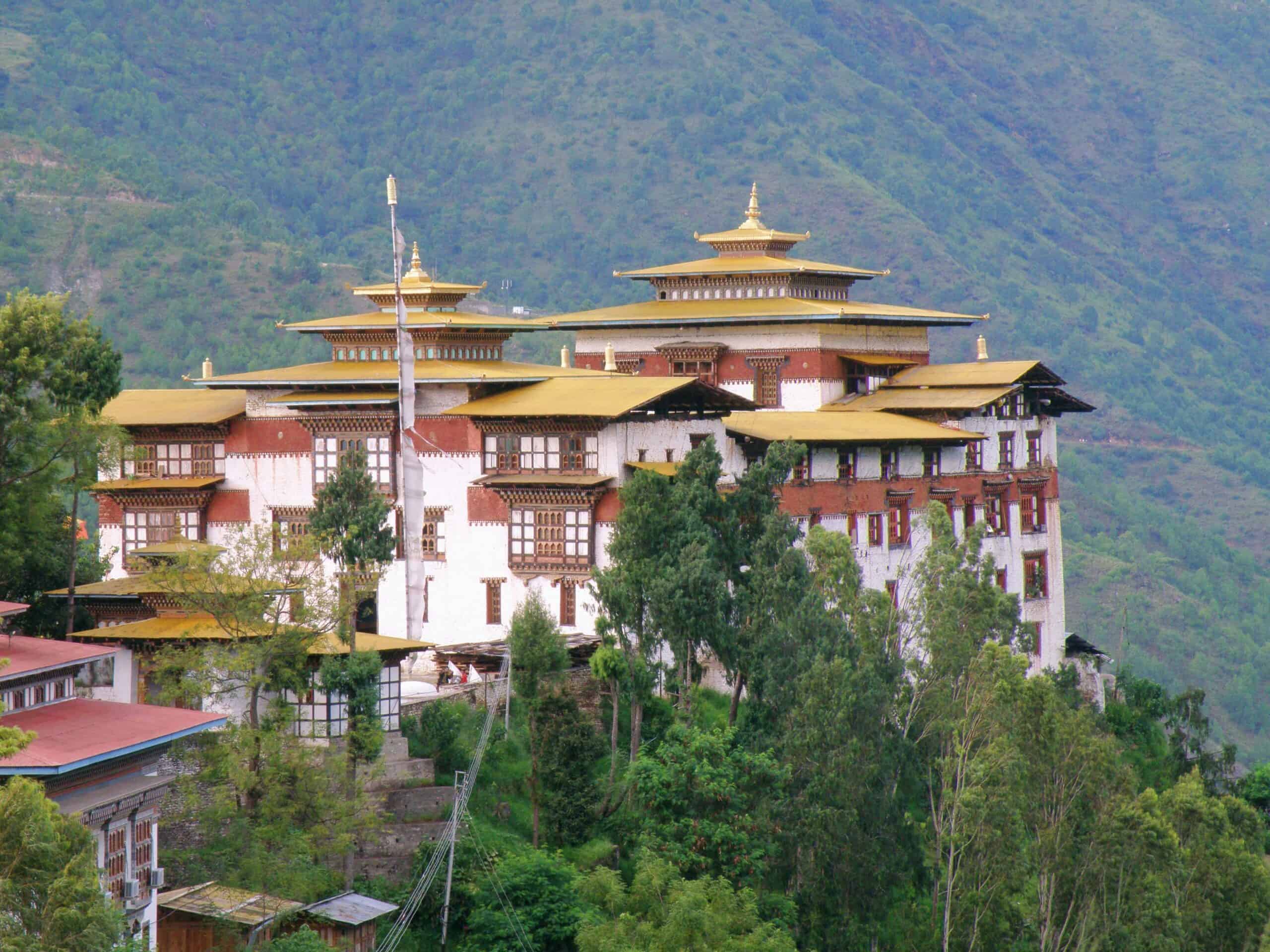
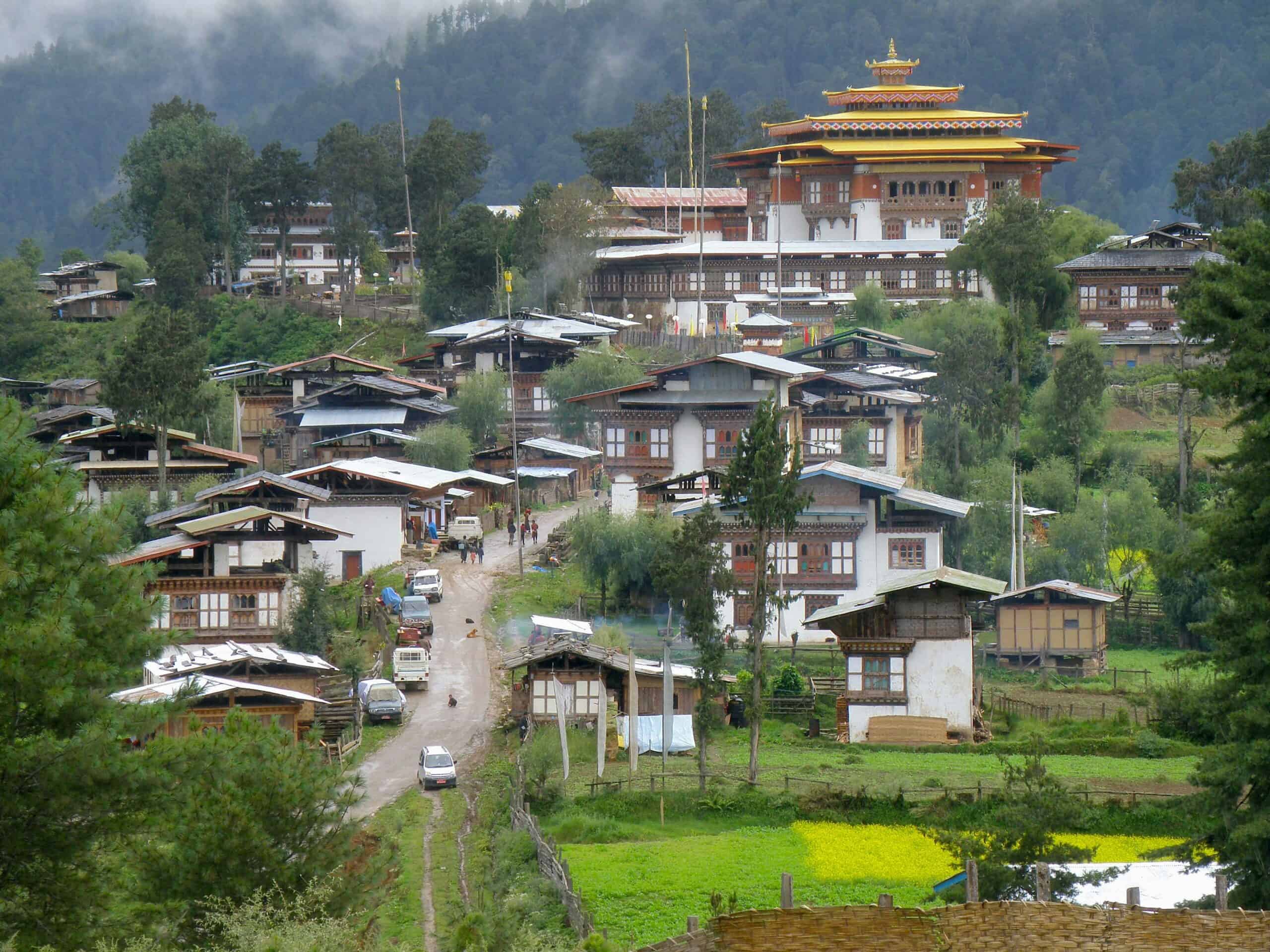
Trashigang, “the auspicious mountain,” is the largest district in eastern Bhutan and the cultural heart of a region that remains the country’s least-visited and most traditional. The town sits on a narrow ridge above a spectacular horseshoe bend of the Drangme Chhu gorge, its dzong perched at the very prow of the promontory with 300-metre drops on three sides.
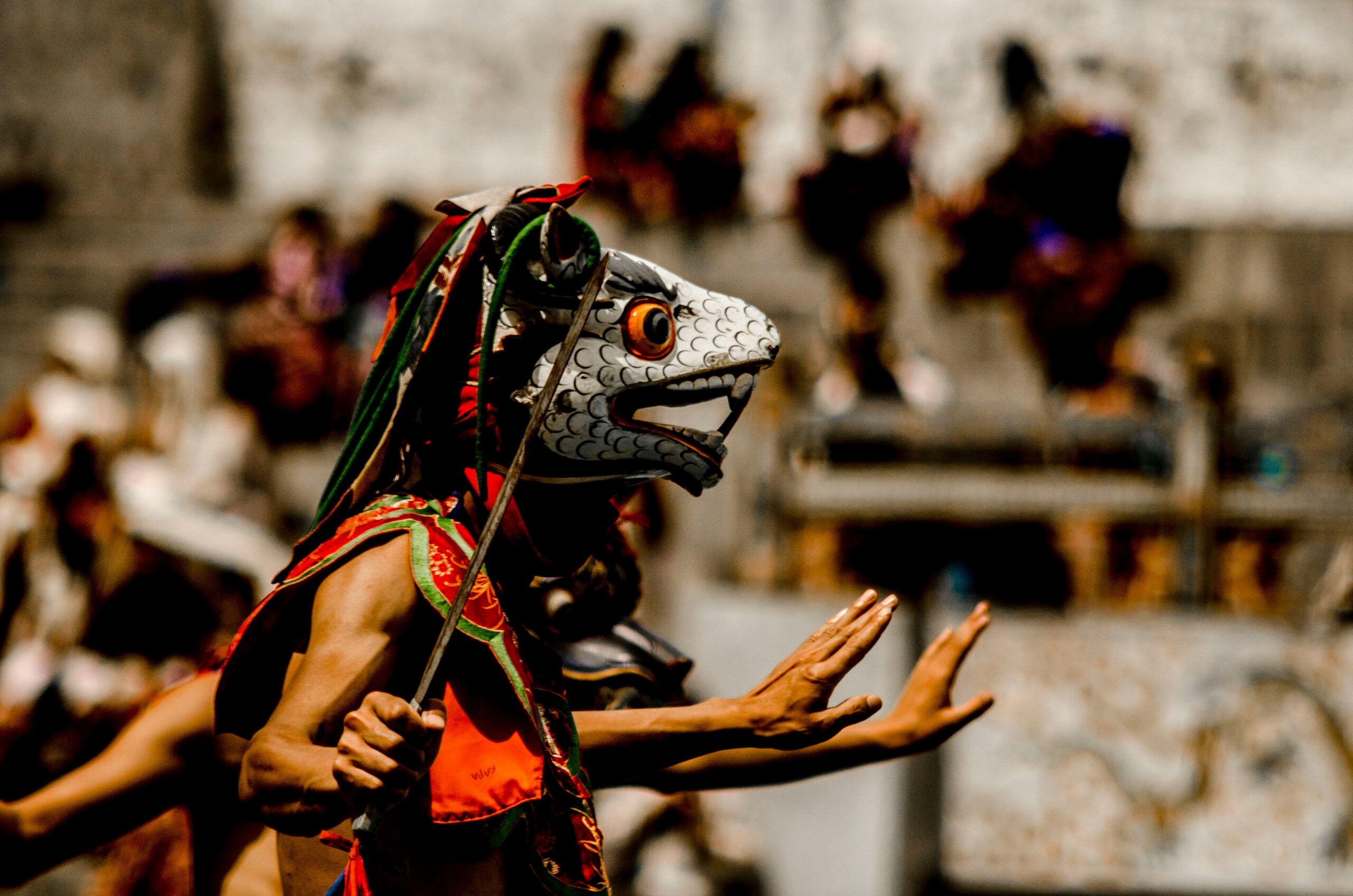
Eastern Bhutan has a distinct identity from the west. The people speak Sharchopkha rather than Dzongkha, weave their own distinctive silk and cotton textiles in styles found nowhere else in Bhutan, and maintain traditions that have changed little over centuries. The silk weavers of Khaling and Radhi produce kishuthara, intricate supplementary-weft silk fabric with complex geometric patterns, that is among the finest textile art in Asia.
The region’s monasteries and temples feel genuinely remote: Gom Kora, perched above the Drangme Chhu on a massive black rock, is one of eastern Bhutan’s most sacred sites, said to contain a body impression of Guru Rinpoche and accessible via a dramatic approach through boulder fields and juniper forest. Chorten Kora in Trashi Yangtse is a huge white stupa modelled on Boudhanath in Nepal, the site of two spectacular annual festivals when pilgrims from across the region circle the stupa in devotion.
For those willing to invest the journey, two days’ driving from Thimphu or a short flight to Yongphulla airport, eastern Bhutan offers an encounter with the country’s deepest traditions, its most vivid textiles, and landscapes of extraordinary wildness and beauty.