Bhutanese Food Guide: What to Eat in the Dragon Kingdom
You’re right, here it is properly structured:
Bhutanese cuisine is a revelation for most visitors. Built on red rice, dried meats, soft fresh cheeses, and the world’s most prominent use of chilli as a primary vegetable, it is a food culture that evolved in near-complete isolation for centuries. It tastes like nothing you will have encountered before.
The national dish: Ema Datshi
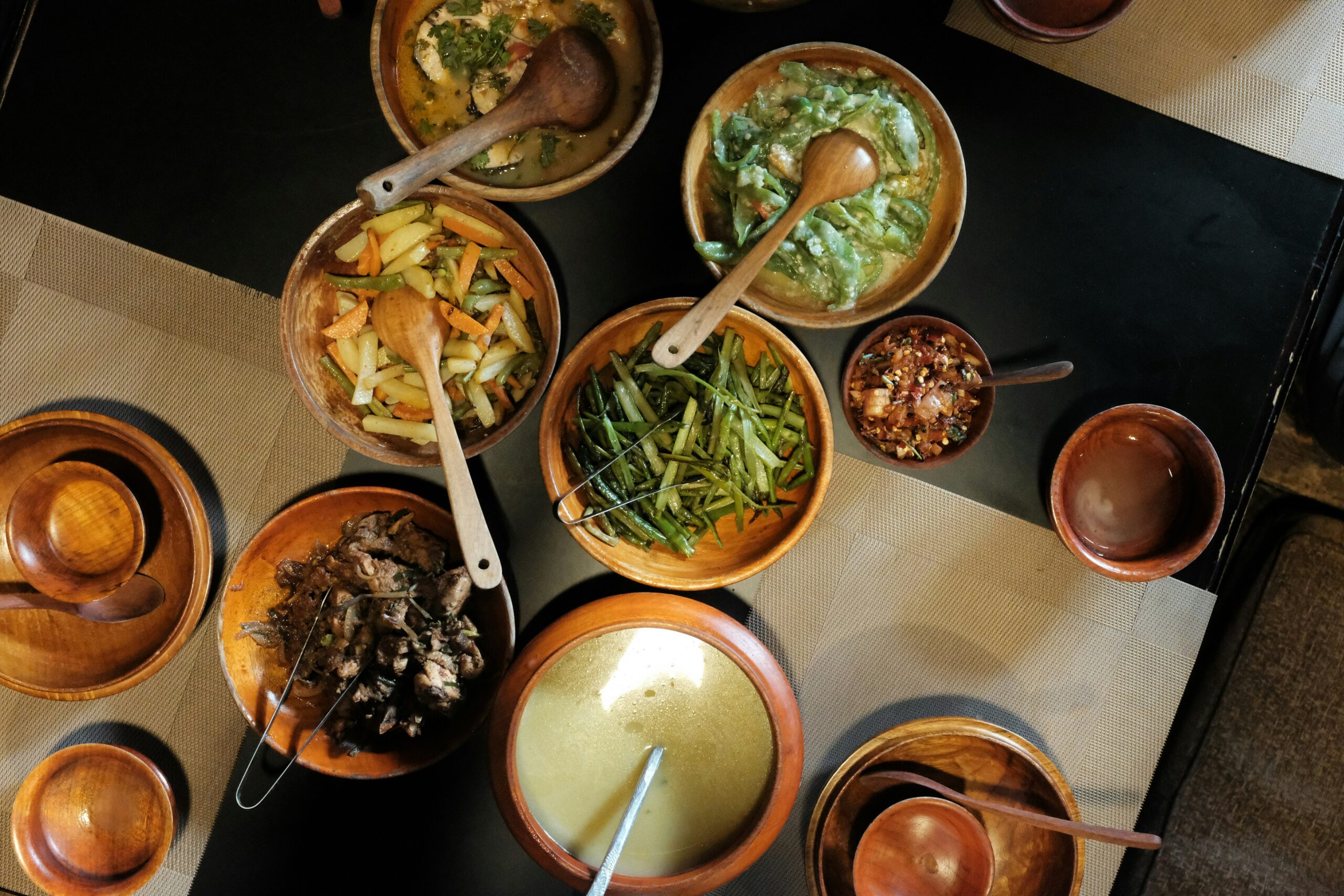
Ema datshi is Bhutan’s national dish: large fresh green chillies (ema) cooked in a sauce of local soft cheese (datshi) with butter and onion. The chillies are not a garnish. They are the main vegetable, halved and stewed until soft. Eating a full bowl as a first-time visitor is one of the more intense culinary experiences in Asia. Simultaneously fiery, creamy and deeply comforting, every Bhutanese family eats it several times a week.
The staple: Red Rice
Bhutanese red rice is a short-grain, nutty variety grown in the terraced paddies of the Paro and Punakha valleys. It forms the base of nearly every meal. Its earthiness and slightly chewy texture holds up well to stew-style dishes like ema datshi.
Other dishes to try
Kewa Datshi
Potatoes and soft cheese cooked together with chilli, a milder, richer version of ema datshi. An excellent introduction to the datshi style for those building their chilli tolerance.
Phaksha Paa
Slices of pork belly stir-fried with dried red chillies and radish. One of Bhutan’s most flavourful meat dishes, eaten primarily in winter when dried meats come down from highland storage.
Jasha Maru
A spiced minced chicken stew with tomatoes, onion, garlic, chilli and ginger. Less fiery than most Bhutanese dishes and a reliable choice for visitors cautious about heat.
Suja (Butter Tea)
Tea churned with yak butter and salt in a traditional wooden churn. Warming, high-calorie and an acquired taste. Its savouriness surprises most visitors expecting something sweet. Offered at every home visit as a gesture of welcome. Accept the first cup.
Ara
Bhutan’s traditional home-brewed spirit, made from rice, maize, wheat or millet. Served at festivals, family gatherings and harvest celebrations. Warmly spiced varieties with butter, eggs and chilli are served during cold weather.
Hoentay
Dumplings filled with turnip leaves, soft cheese and sometimes pork, specific to Haa district. Momo, the Himalayan steamed dumpling familiar from Tibet and Nepal, is widely available and generally less fiery than main dishes.
Seasonal eating
Bhutanese cooking is highly seasonal. Autumn brings fresh-harvest red rice and dried mushrooms. Winter features dried yak and pork. Spring has wild fiddlehead ferns and fresh young chillies. Summer brings pumpkin, fresh spinach and mountain greens. Your meals on a Kiyul Odyssey tour reflect these seasons.
Managing the chilli heat
Bhutanese cooking is genuinely very spicy, not moderated for foreign visitors. Your guide and hotel kitchen will adjust the chilli level if requested. Simply ask for less spicy. Most visitors adapt surprisingly quickly over a 7-day tour.
Dining on a Kiyul Odyssey tour
All meals from arrival dinner to departure breakfast are included in our tours. We arrange a mix of hotel restaurant dining and, where available, home-cooked meals at local farmhouses, the most authentic way to experience Bhutanese food. Vegetarian, vegan and gluten-free requirements are fully accommodated with advance notice.