Wangdue Phodrang
The gateway to Bhutan's warm lowlands
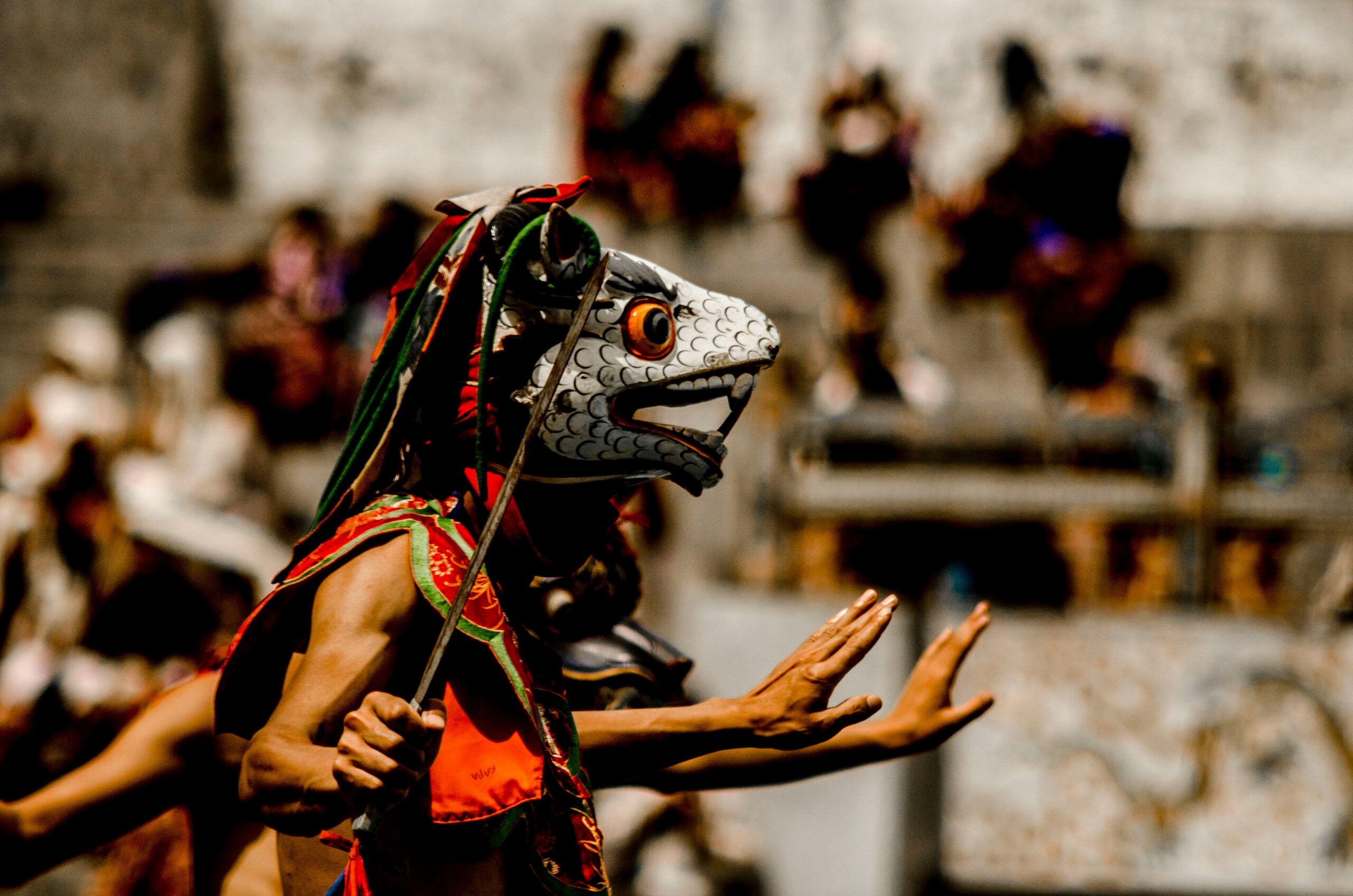
Wangdue Phodrang, often shortened to Wangdue, sits at one of Bhutan’s lowest and warmest inhabited valleys, where the subtropical warmth rising from the south collides with the cooler Himalayan air. The town serves as the gateway to Phobjikha, Trongsa, and Gangtey, and rewards those who linger with its own distinct character and cultural sites.
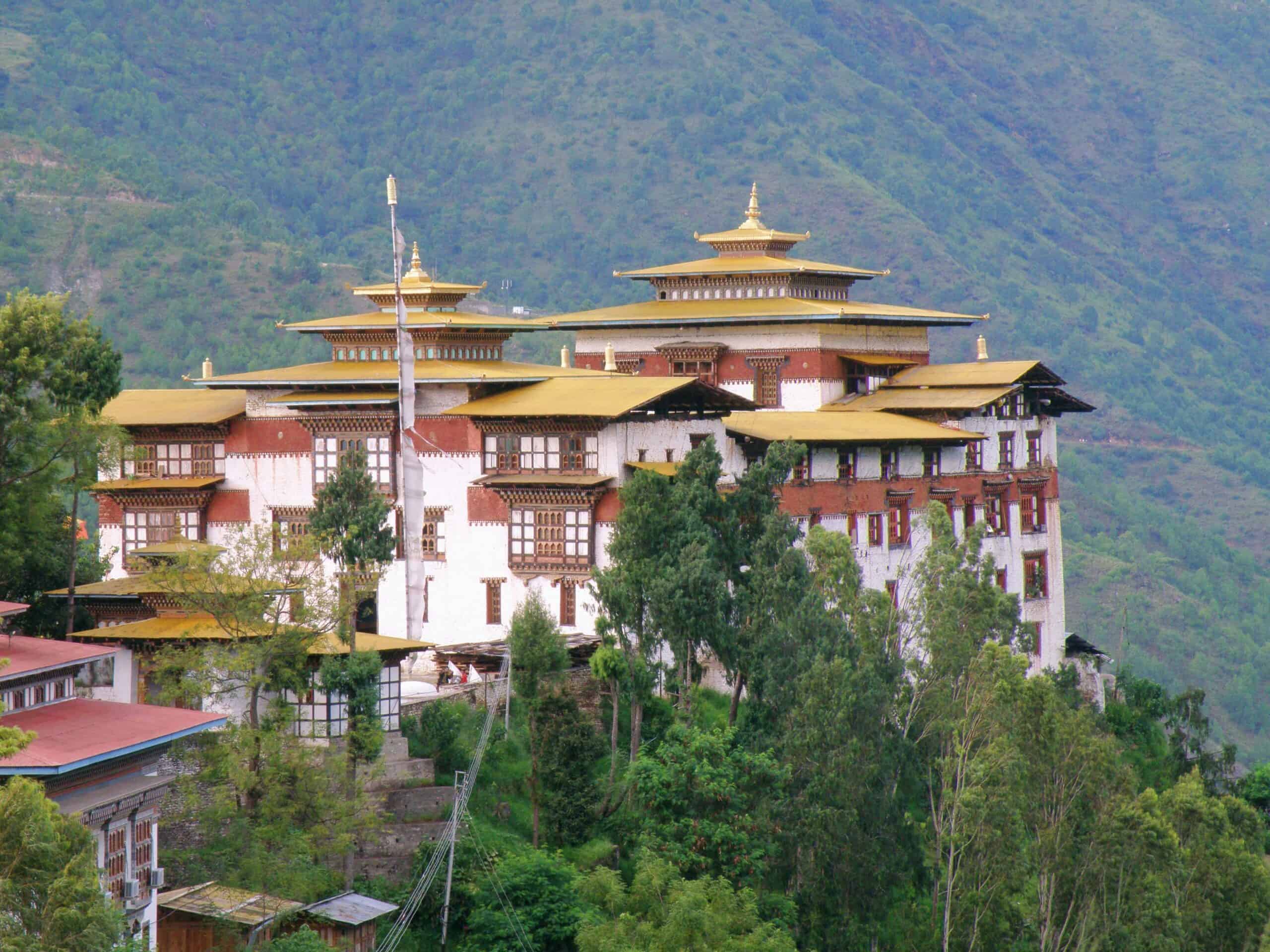
The Wangdue Phodrang Dzong occupied a dramatic ridge above the confluence of the Pho Chhu and Tang Chhu rivers for nearly four centuries before it was devastated by fire in 2012. Reconstruction is now underway, and visitors can observe the massive restoration effort, an extraordinary opportunity to see traditional Bhutanese construction techniques being used to rebuild a historic monument at full scale.
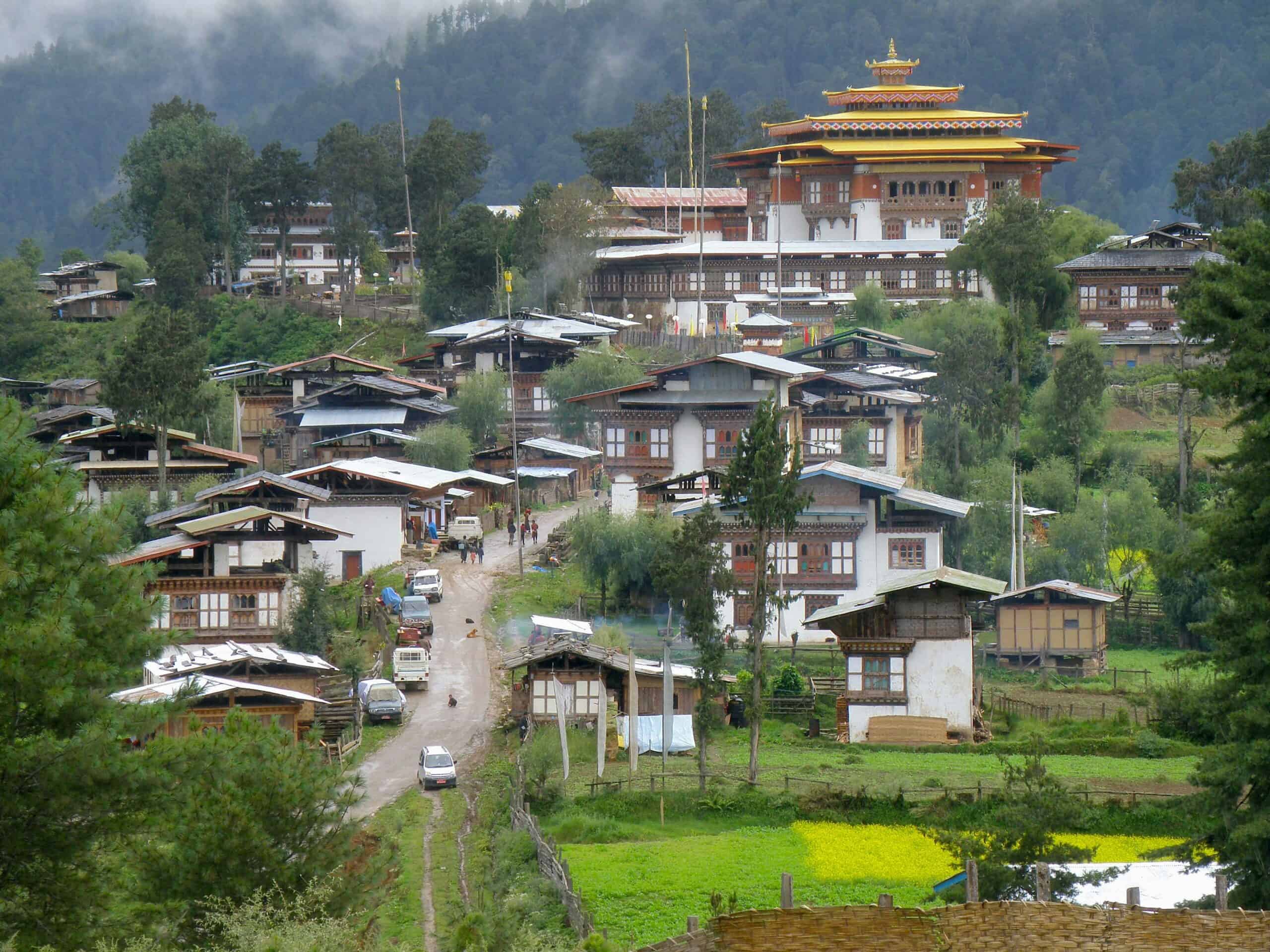
The town has a relaxed, unhurried atmosphere that distinguishes it from busier tourist centres. Local markets sell bamboo and rattan crafts woven in the Rukubji and Adha villages nearby, some of the finest basket-weaving traditions in Bhutan. The valleys around Wangdue are dotted with traditional farmhouses, rice terraces, and chorten (stone stupas) that make for excellent slow-paced cycling and walking.
Wangdue is also the trailhead for the Gangtey-Gogona trek, a two-day walk across high ridges and through traditional villages to Phobjikha valley. The surrounding forests shelter leopards, golden langurs, and a rich variety of Himalayan birds.