Thimphu Tshechu
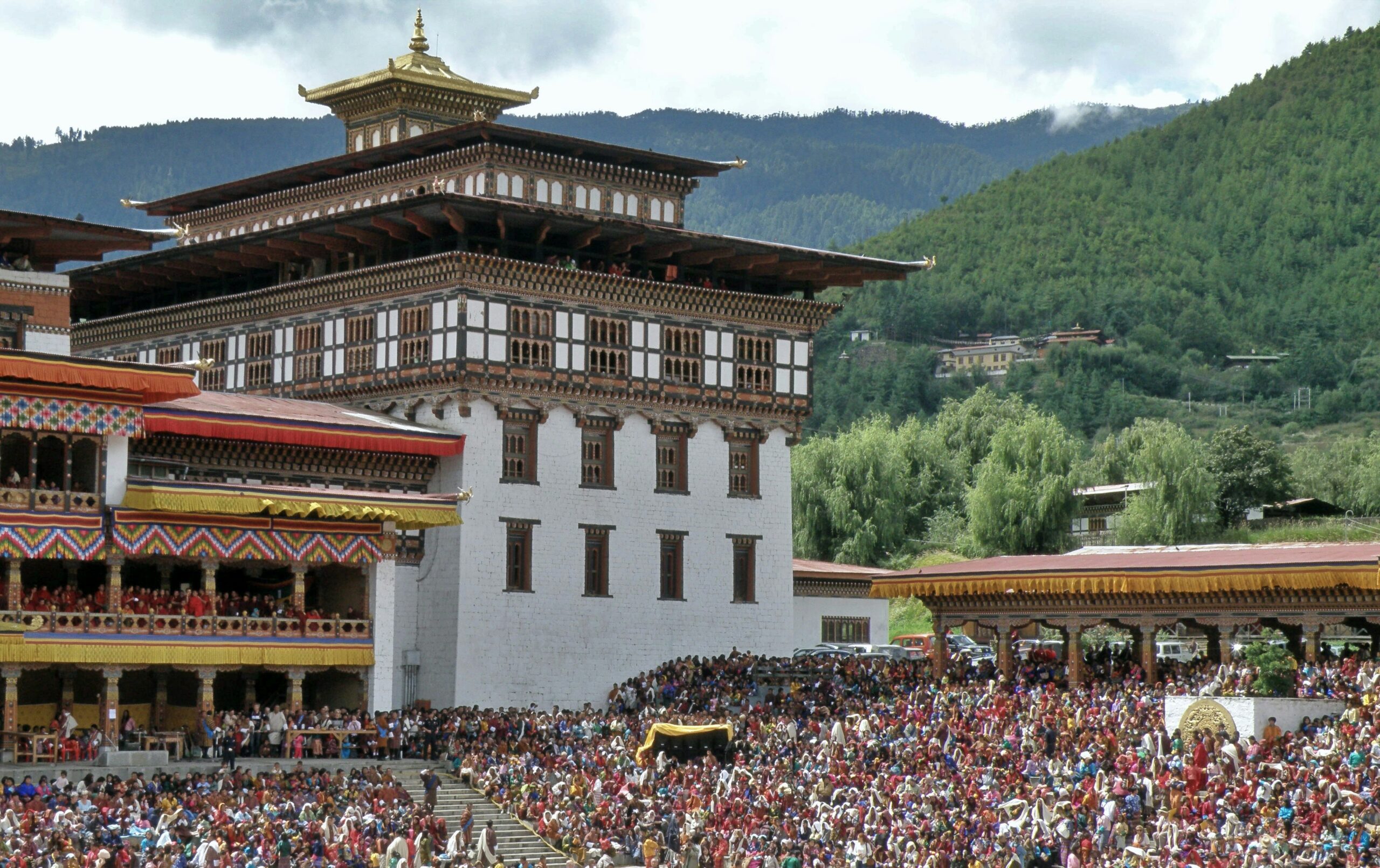
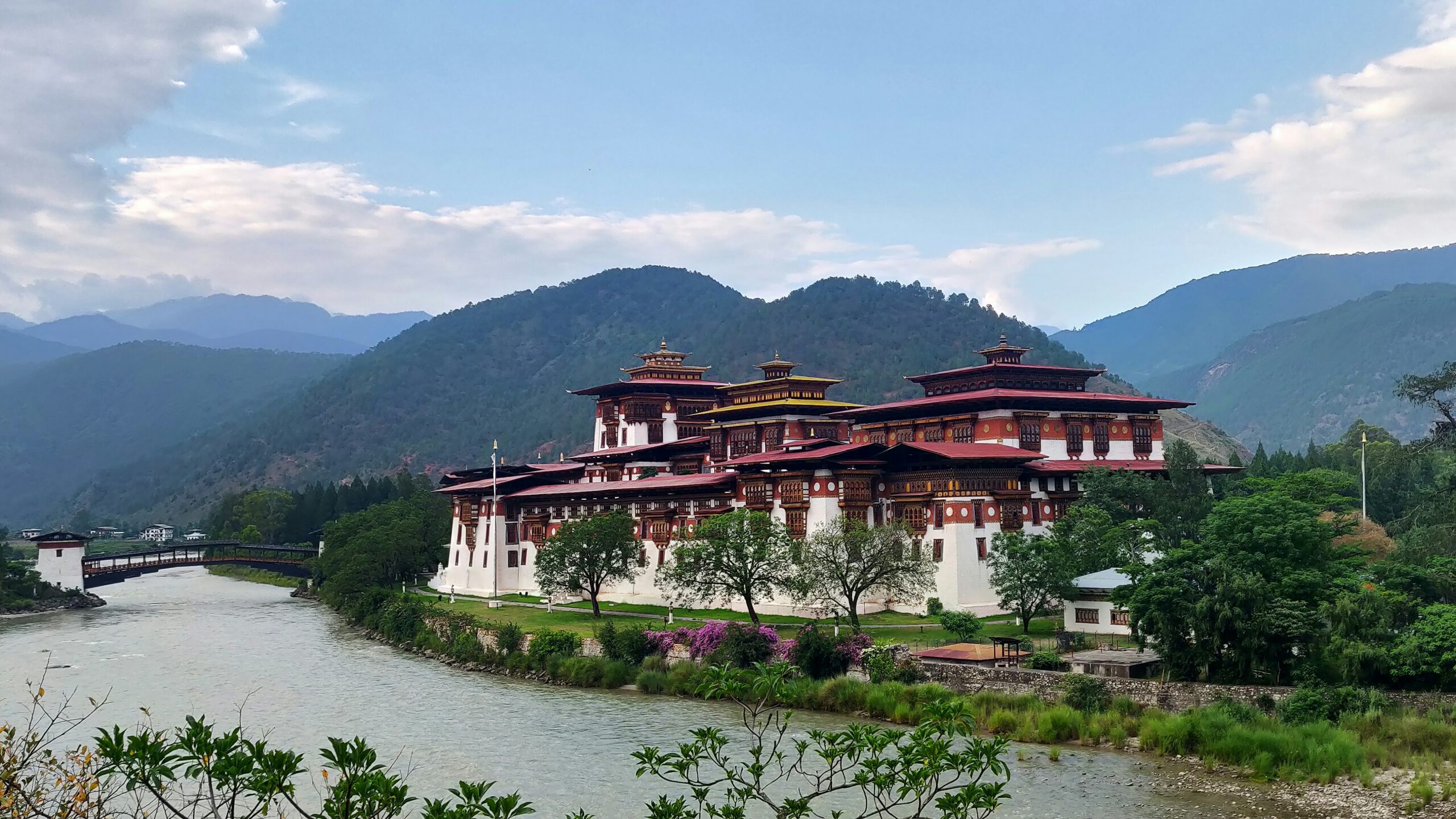
The Thimphu Tshechu is Bhutan’s largest and most famous festival: a three-day celebration held each autumn in the courtyard of the Tashichho Dzong, the seat of Bhutan’s government and the summer residence of the Je Khenpo (chief abbot). As the capital’s festival, it draws the largest and most diverse crowds of any tshechu in the country, with foreign visitors joining thousands of Bhutanese from across the kingdom.
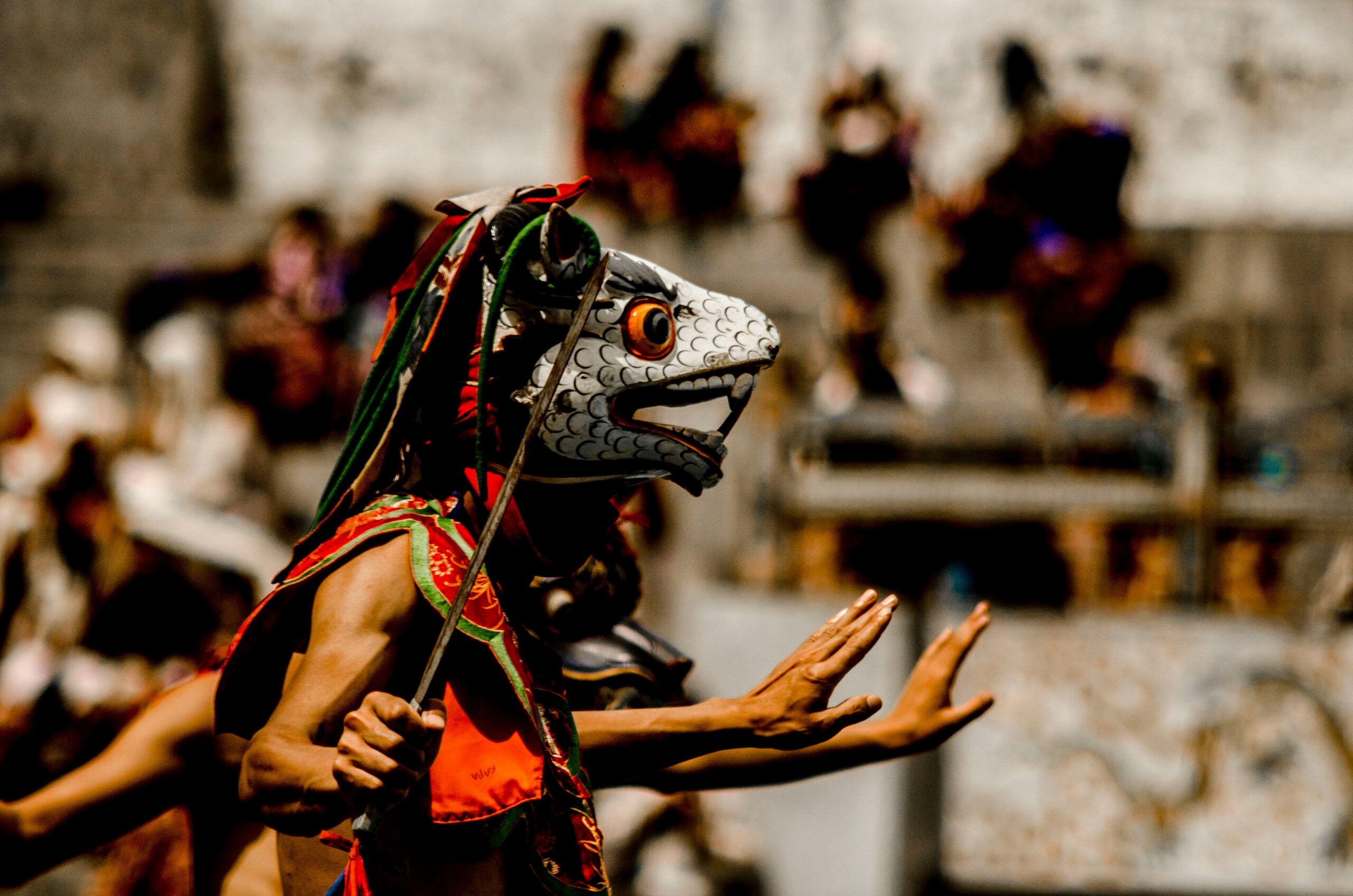
Over three full days, monks perform an extraordinary sequence of sacred cham dances: the Dance of the Four Stags, the Dance of the Dagger, the Ging and Tsholing Dance, and the culminating Dance of the Judgement of the Dead, in which the Lord of the Dead weighs souls against their deeds in a vivid dramatisation of Buddhist teachings on karma and rebirth. Interspersed with these formal dances are comedic interludes by Atsaras, masked clown-monks who use bawdy humour and irreverence to teach the same moral lessons from a different angle.
The festival concludes with the dawn unfurling of the Thimphu Thongdrel, a massive sacred appliquéd thangka, one of the largest in Bhutan, in the pre-dawn darkness of the final day. Devotees who have often travelled for days to be present prostrate in the torchlight as the thangka is slowly unrolled down the dzong’s exterior wall, its sacred imagery briefly illuminated before being rolled away as the sun rises. The atmosphere is electric with devotion.
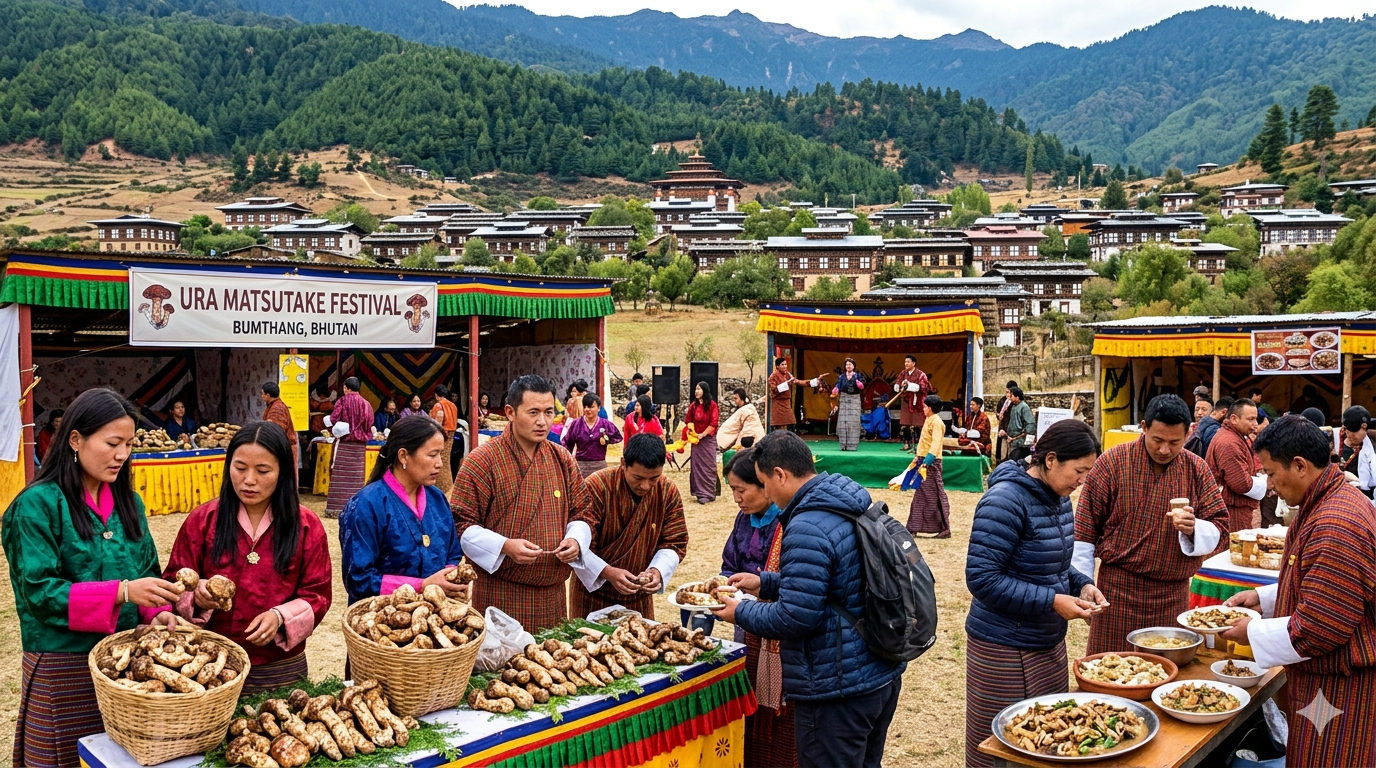
Beyond the formal programme, the Thimphu Tshechu transforms the capital into a festival city. The streets fill with Bhutanese in their finest traditional dress, food vendors set up stalls of traditional cuisine, and the city’s energy reaches a pitch rarely experienced at any other time of year. For first-time visitors to Bhutan, the Thimphu Tshechu provides the most comprehensive introduction to Bhutanese cultural and religious life.