Traditional Dishes, Restaurants & Dining Etiquette
Bhutanese Food Guide: What to Eat & Drink in Bhutan
Bhutanese cuisine is bold, fiery, and utterly unlike anything else in the Himalaya built around Ema Datshi (chilli and cheese stew), nutty red rice, and rich fermented flavours. This guide covers the dishes you must try, where to eat them, and what to expect at mealtimes.
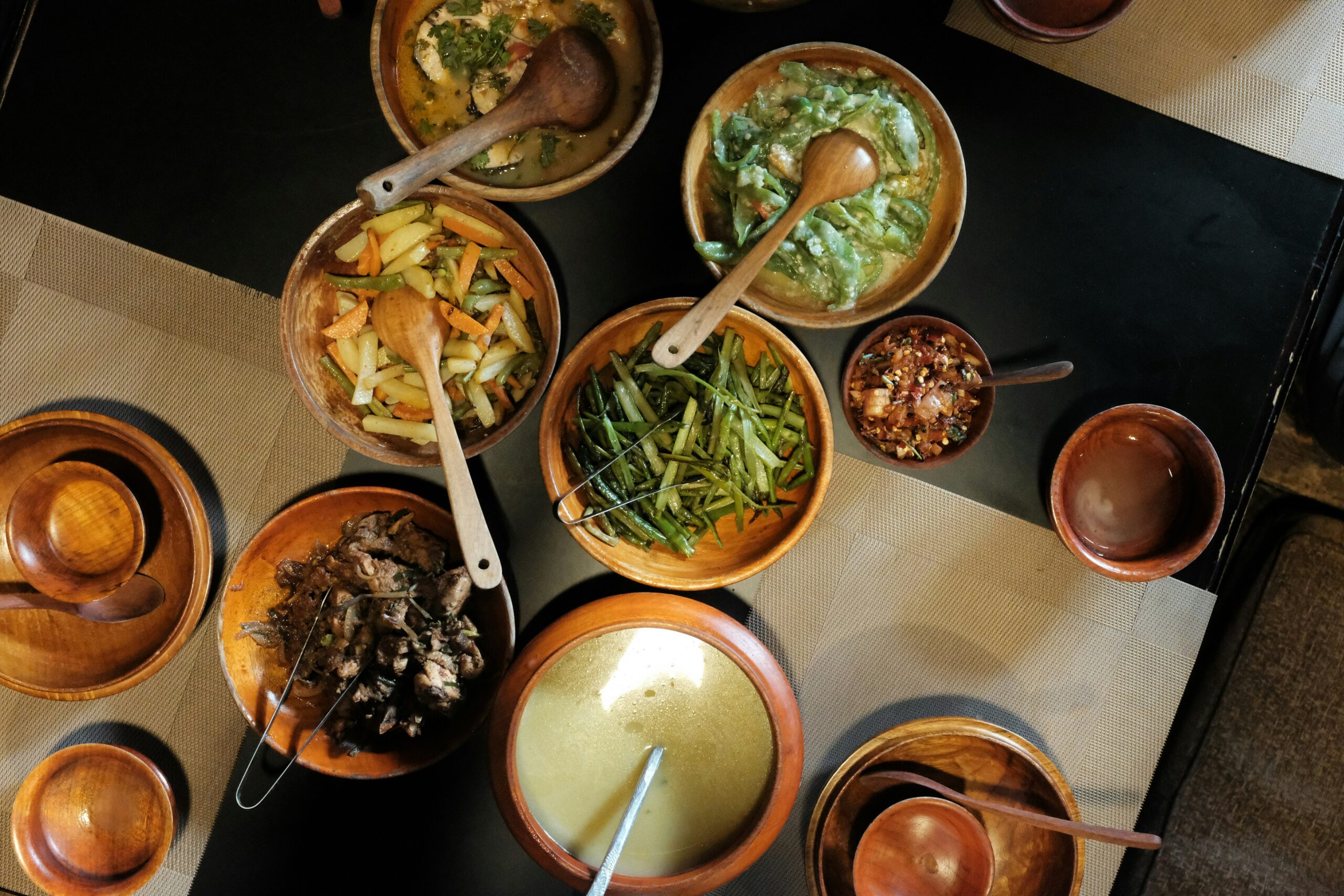
Bhutanese food is one of the great undiscovered cuisines of Asia. Built around an almost confrontational love of chilli, not as a garnish or a heat accent but as the primary vegetable of the meal, it is fierce, comforting, and utterly distinctive. If you eat only tourist buffets throughout your trip, you will leave with a pleasant but incomplete picture. This guide helps you go further.
Must-Try Bhutanese Dishes
Ema Datshi
The undisputed national dish. “Ema” means chilli and “Datshi” means cheese, but this is not a flavour combination in the Western sense. Whole green or red chillies, not chopped, not blended, are simmered in a rich sauce of local yak or cow cheese until the chillies are soft and the sauce is thick, creamy, and searingly hot. It arrives as a main course, not a side dish, eaten with red rice. It is brilliant.
Red Rice
The staple grain of Bhutan, organically grown at high altitude, nutty and slightly sticky with a pleasant chew. It is nutritionally superior to white rice and turns a soft mauve-pink when cooked. Every meal in Bhutan is built around it.
Phaksha Paa
Pork belly slow-cooked with dried red chillies, radish, and leafy greens. A winter staple in farmhouses across the country, it is deeply savoury and warming. Seek it out at local restaurants rather than tourist hotels.
Jasha Maroo
Minced chicken in a spiced tomato, ginger, and onion gravy. This is the most tourist-accessible Bhutanese dish: flavourful, modestly spiced, and almost universally enjoyed. A good entry point if Ema Datshi’s heat level concerns you.
Momo
Steamed or fried dumplings filled with pork, beef, or vegetables. Ubiquitous street food and snack fare across Bhutan, borrowed from Tibetan and Nepali culinary traditions but fully adopted into everyday Bhutanese eating. Excellent at roadside stalls.
Hoentay
A speciality of the Haa Valley in western Bhutan: buckwheat dumplings stuffed with turnip greens and cheese. Harder to find outside Haa, but worth seeking out if your itinerary takes you there.
Traditional Bhutanese Drinks
Suja (Butter Tea)
The traditional Bhutanese hot drink, made from black tea churned with salt and yak butter until emulsified into something that tastes more like a warm, savoury broth than tea in the Western sense. It is an acquired taste. Accept a cup when offered by a Bhutanese host, as declining is mildly impolite. You do not have to finish it.
Singchang and Ara
Singchang is a mildly alcoholic barley or millet beer brewed in homes across rural Bhutan. Cloudy, sour, and slightly fizzy, it is consumed at festivals and family gatherings. Ara is the distilled version, a stronger spirit made from rice, wheat, or barley, often served warm with an egg cracked into it on cold mornings. Both are widely available at festivals.
Vegetarian and Vegan Options
Vegetarians eat reasonably well in Bhutan. Ema Datshi, mushroom datshi, fern datshi, and various vegetable stir-fries are on most menus. Buddhism influences Bhutanese attitudes toward meat, and many households observe meatless days. However, dairy, particularly butter and local cheese, appears throughout Bhutanese cooking.
Vegans will find it challenging outside Thimphu, where a handful of restaurants now cater to plant-based diets. Communicate clearly with your guide before arrival and they can arrange vegan-friendly meals at most hotels.
Where to Eat in Bhutan
Tourist hotel buffets are convenient and included in the SDF package, but they typically tone down the spice level and offer a somewhat sanitised version of Bhutanese cuisine. For more authentic flavours, ask your guide to take you to a local restaurant.
In Thimphu, the area around the Weekend Market and Norzin Lam has several genuine Bhutanese eateries where you will eat alongside civil servants and monks. In Paro, small restaurants near the main street serve home-style cooking at a fraction of hotel prices. Your guide’s knowledge of which kitchens are trusted is invaluable here.
Dining Etiquette and Customs
Mealtimes in Bhutan are relaxed and generous. Rice is served in large quantities and it is normal and polite to have second or third helpings. Declining additional rice can seem rude to older hosts. If invited to a Bhutanese home, wait to be seated and follow the lead of your host before eating. Suja will be offered; accept it graciously. Shoes are removed before entering most traditional homes. Complimenting the food is always appreciated.
In restaurants, tipping is not standard practice but is welcomed and becoming more common in tourist areas. Ten percent of the bill is generous. At festival food stalls, prices are fixed and haggling is not appropriate.
Frequently Asked Questions
What Is Bhutan’s National Dish?
Ema Datshi, a stew of whole chillies cooked in yak or cow cheese sauce, is officially and proudly Bhutan’s national dish. It appears on tables at every meal, in every region, at every social stratum. There are dozens of variations: green chilli or red chilli, yak cheese or cow cheese, with potatoes (Kewa Datshi) or mushrooms (Shamu Datshi) substituted for chilli. All versions involve the same rich, fatty cheese sauce. It is eaten with red rice and is genuinely central to Bhutanese cultural identity in a way that few national dishes truly are.
Is Bhutanese Food Spicy?
Very. Bhutanese people eat chilli at a level that most international visitors find surprising, not as a condiment but as the main ingredient. Tourist hotels adjust spice levels downward for foreign guests, so what you eat at a hotel buffet is typically 30 to 50% of the heat that local cooking reaches. If you enjoy spicy food and want the authentic experience, tell your guide explicitly. If you have a low chilli tolerance, Jasha Maroo and Phaksha Paa are usually milder options, and most kitchens can prepare a less fiery version of Ema Datshi on request.
Is Alcohol Allowed in Bhutan?
Yes, alcohol is legal and widely available in Bhutan. Beer (Red Panda and Thunder Dragon are popular local brands), wine, and spirits including the locally produced Ara are sold at shops, restaurants, and hotels across the country. There is no prohibition. Alcohol is not permitted inside dzong courtyards and festival grounds during official ceremonies, but it is freely consumed at social gatherings around festival sites. Bhutan observes occasional government-declared dry days, particularly around national events. Your guide will flag these in advance if relevant to your travel dates.