Bhutan's Warmest Valley, Dzongs, Rice Fields & the Mo Chhu River
Punakha Valley Travel Guide: Dzongs, Temples & River Rafting
Punakha, Bhutan's historic former capital, sits at just 1,200 metres elevation and stays warm even in winter. It is home to Punakha Dzong, widely considered the most beautiful fortress-monastery in the Himalaya and the atmospheric Chimi Lhakhang fertility temple.

Punakha surprises every visitor who arrives expecting the high-altitude chill of Thimphu or Paro. At just 1,200 metres elevation, the valley is warm, lush, and rice-green even in mid-winter. It served as Bhutan’s capital until 1955 and remains the winter seat of the Je Khenpo, Bhutan’s Chief Abbot. Its dzong is the most beautiful in the kingdom. A single day here is not enough.
Punakha Dzong
Formally known as Pungtang Dechen Photrang Dzong (Palace of Great Happiness), Punakha Dzong was built in 1637 to 1638 by Zhabdrung Ngawang Namgyal, the founder of the Bhutanese state, at the precise confluence of the Pho Chhu (Father River) and Mo Chhu (Mother River). The location was chosen according to a prophecy by Guru Rinpoche eight centuries earlier, and standing at the dzong’s prow watching the two rivers merge below its whitewashed walls, it is easy to believe the prophecy.
The dzong is the administrative and religious centre of Punakha District and contains some of the finest examples of traditional Bhutanese wood carving and painting anywhere in the country. The central tower (Utse) rises six storeys and houses the embalmed body of Zhabdrung Ngawang Namgyal. The flowering jacaranda trees planted along the approach path bloom vivid purple in February and March, creating one of the most photographed scenes in Bhutan.
Dress with particular care here, as it is an active religious site. Men must wear a Kabney (ceremonial scarf) and your guide will have one available. Women must wear a Rachu. Legs and shoulders must be covered. Shoes are removed at every inner temple entrance.
Chimi Lhakhang: The Fertility Temple
A 30-minute walk across golden rice terraces and through a small village brings you to Chimi Lhakhang, the 15th-century temple dedicated to Lama Drukpa Kunley, the “Divine Madman” of Bhutanese Buddhist legend. Drukpa Kunley was a Tibetan tantric master who wandered Bhutan in the late 1400s, renowned for his unconventional approach to spiritual teaching, including the use of explicit imagery to shock followers out of conventional thinking.
His temple at Chimi Lhakhang is a pilgrimage site for couples seeking fertility blessings. Wooden phallus symbols, representing Drukpa Kunley’s power over demons, appear throughout the temple and the surrounding village. The walk across the rice fields to reach it is as memorable as the temple itself: wide, flat, and golden-green with views of forested hills on all sides.
Things to Do in Punakha Valley
Khamsum Yulley Namgyal Chorten
A four-storey stupa built in 1999 on a forested ridge above the valley floor. The 45-minute uphill walk rewards visitors with sweeping panoramic views across Punakha’s patchwork of rice fields and river bends. Best visited in late morning for the light.
Mo Chhu River Rafting
Grade II to III white-water rafting downstream from the dzong through a scenic gorge. Approximately two hours on the water, available October through May and suspended during monsoon high-water season. Minimum age is typically eight years. Arrange through your tour operator in advance.
Punakha Suspension Bridge
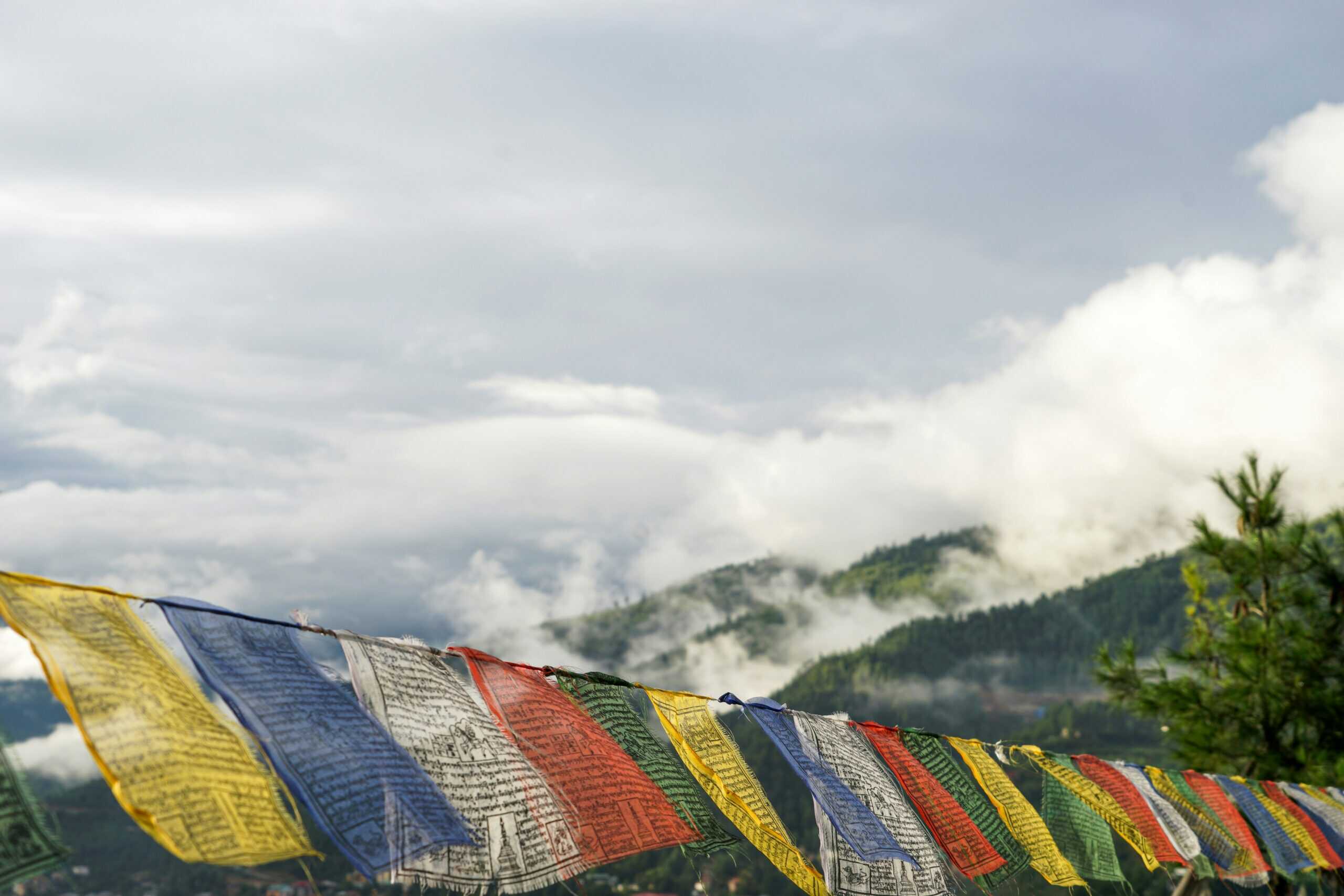
One of the longest traditional footbridges in Bhutan, spanning the Pho Chhu upstream of the dzong. Colourful prayer flags line the cables. A short walk from the main dzong car park.
Punakha Drubchen and Tsechu (February/March)
Bhutan’s most dramatic festival, held inside and around Punakha Dzong. The Drubchen reenactment involves hundreds of costumed participants in a mock 17th-century battle. Far fewer international tourists than Paro Tsechu, giving a more authentic community feel.
When to Visit Punakha
Punakha is genuinely worth visiting year-round, but it peaks in two windows: February to March for the jacaranda bloom and Drubchen festival, and October to November for the rice harvest, clear skies, and post-monsoon green. In winter, Punakha’s low altitude makes it the warmest easily accessible valley in western Bhutan, a welcome contrast to cold nights in Thimphu or Paro. The valley receives more rain than Paro during monsoon season (June to August) but remains accessible throughout, unlike some higher-altitude routes.
Day Trip vs Overnight Stay
Most standard tour itineraries treat Punakha as a day trip from Thimphu or Paro. This is feasible. The drive from Thimphu over Dochula Pass takes roughly 90 minutes each way and covers the dzong, Chimi Lhakhang, and the suspension bridge comfortably.
However, an overnight stay reveals a different valley: the dawn light on the dzong before the day-trip buses arrive, an early-morning walk through empty rice fields, and a more relaxed pace throughout. It is strongly recommended if your schedule allows. The drive over Dochula Pass on a clear morning, with views of 108 chortens and a panorama of Himalayan peaks stretching east, is a highlight in itself and worth timing for maximum clarity.
Frequently Asked Questions
Is Punakha Worth Visiting?
Unequivocally yes. Punakha Dzong alone, set at a river confluence, surrounded by rice fields, and built to a scale and elegance that other dzongs do not quite match, justifies the journey. Add Chimi Lhakhang, the river rafting, and the festival calendar and Punakha is consistently ranked by experienced Bhutan travellers as the highlight of western Bhutan after Tiger’s Nest. It is particularly rewarding for those visiting in winter or early spring who find Thimphu and Paro too cold, as Punakha’s low altitude keeps it comfortable when the higher towns are chilly.
When Is Punakha Tsechu?
Punakha Tsechu follows immediately after the Punakha Drubchen, both held in the first or second month of the Bhutanese lunar calendar, typically February or early March in the Gregorian calendar. Exact dates shift each year with the lunar calendar. The Drubchen (two days) runs first, followed immediately by the Tsechu (three days). Confirm the specific Gregorian dates for your year of travel with your tour operator or the Tourism Council of Bhutan festival calendar. Accommodation in Punakha fills up for the festival period, but far less dramatically than during Paro Tsechu.
How Far Is Punakha from Thimphu?
Punakha is approximately 70 to 75 km from Thimphu by road, but the journey takes around 90 minutes to two hours due to the mountain road over Dochula Pass (3,100 m). The pass is the scenic high point of the drive. On a clear day it offers a famous panoramic view of 108 memorial chortens with snow-capped Himalayan peaks rising behind them. Most operators stop here briefly on the way to or from Punakha. The road is paved throughout and well-maintained. From Paro, add approximately 30 to 40 minutes to the Thimphu journey time.